Why Transformer Cores Are Laminated: The Hidden Physics Inside Every Dry-Type Transformer
A transformer core is never solid metal — it’s a stack of thin silicon-steel laminations. Eddy-current loss scales with thickness²: halve thickness = quarter the loss. Standard grades 0.23/0.27/0.30 mm CRGO, step-lap joints, stacking factor 0.95–0.97. Includes 5-question buyer checklist.

If you have ever looked inside a dry-type transformer — or watched one being assembled on a factory floor — you have seen it: a core built from hundreds of thin steel sheets, stacked layer by layer like a deck of cards.
It is a strange sight at first. Why go to all this trouble? Why not simply cast the core from one solid block of iron? Wouldn’t that be stronger, simpler, and more durable?
The answer is that those thin sheets are not a manufacturing compromise. They are the very reason a transformer can run efficient, cool, and safe for decades. Behind the “layer cake” lies some of the most elegant electromagnetic engineering ever devised. Let us explain.
- The Invisible Enemy: Eddy Currents To understand lamination, you first have to understand the problem it solves — eddy current loss.
When alternating current flows through a transformer’s windings, it generates a rapidly changing magnetic field. That field does not just loop through the coils; it also passes through the iron core, which serves as the magnetic circuit. And here is the catch, straight from Faraday’s law of induction: a changing magnetic field induces electric currents inside any conductor it passes through.
If the core were one solid block of metal, it would be one giant conductor. Inside it, the induced currents would circulate in countless loops — like whirlpools in water. These are eddy currents.
Left unchecked, eddy currents cause three serious problems:
Severe heating. The currents flow against the iron’s own electrical resistance, generating heat through Joule losses — an electric furnace inside your transformer.
Wasted energy. That heat is pure loss. It directly reduces transformer efficiency and raises operating cost over the machine’s entire life.
Safety and aging risk. Excessive core temperature accelerates insulation aging and can eventually lead to equipment failure.
In short, a solid core is magnetically simple but electrically
 Stacked Core laminations
self-destructive.
Stacked Core laminations
self-destructive.
- The Elegant Fix: Laminated Silicon Steel Engineers solved the problem with a deceptively simple trick: cut the solid core into thin sheets, insulate each sheet, and stack them back together. Three principles make it work.
2.1 Divide and Conquer: Block the Eddy Current Path Each silicon steel sheet is coated with a thin insulating layer (typically insulation varnish or an inorganic coating). The coating acts like barriers on a wide highway: it forces the large, circulating eddy currents to break up into many tiny currents, each confined within a single sheet.
The bigger the current loop, the larger the loss. Confine the loops to a single 0.3 mm sheet, and the loss collapses with them.
2.2 The Magic of Silicon: Raise the Resistance Silicon is added to the steel for one primary reason: it dramatically increases electrical resistivity. The higher the resistance, the weaker the induced eddy currents, and the less heat they generate. This is why we use silicon steel (electrical steel) rather than plain iron for transformer cores.
2.3 Why the Sheets Must Be Thin: The Square Law Here is the number every engineer remembers: eddy current loss is proportional to the square of the lamination thickness.
That single relationship drives everything. Cut the sheet thickness in half, and eddy current loss drops to one quarter. This is why modern cores use increasingly thin laminations — common grades are 0.23 mm, 0.27 mm and 0.30 mm — and why grain-oriented cold-rolled silicon steel (CRGO), with its optimized magnetic direction, is the industry standard for power transformers.
2.4 A Magnetic Bonus Limiting current is only half the job — the core’s real duty is to conduct magnetic flux efficiently. Silicon helps here too: it narrows the material’s hysteresis loop, reducing hysteresis loss and making the steel easier to magnetize and demagnetize. The result is an ideal soft magnetic material: highly permeable, low-loss, and quick to respond.
- The Engineering Trade-Off: Why Not Even Thinner? If thinner always means lower loss, why stop at 0.23 mm? Because lamination is a balance, not a race:
Stacking factor. Ultra-thin sheets leave more air gaps between layers, reducing the core’s effective cross-section. The lamination (stacking) factor of a well-built core typically sits around 0.95–0.97 — any lower, and you lose more in magnetic performance than you save in eddy currents. Manufacturing cost and time. More sheets mean more cutting, more stacking, more handling — and tighter tolerances on burrs (typically ≤ 0.02 mm) and joint gaps. The cost climbs fast.
Joint design. In practice, how the sheets meet matters as much as how thin they are. Modern cores use interleaved, 45° mitred and step-lap joints so that air gaps are staggered between layers, keeping the magnetic path continuous and quiet.
Choosing the right lamination thickness and grade for a given rating is therefore a genuine engineering decision — one that separates a well-
 Stacked Core laminations
designed transformer from a merely cheap one.
Stacked Core laminations
designed transformer from a merely cheap one.
- What This Means When You Buy a Transformer Core loss (no-load loss) is one of the largest single efficiency losses in any transformer, and it runs 24 hours a day, 365 days a year — whether the unit is loaded or not. Over a 25-year service life, the difference between a good core and a poor one is real money.
So the next time you compare quotations from suppliers, here are the questions worth asking:
Which silicon steel grade is used? (e.g., 30Q120, 27Q100, or equivalent M4/M3 grades — not just “high-quality silicon steel”)
What is the lamination thickness? 0.30 mm is common; 0.27 mm and 0.23 mm offer progressively lower loss.
Are the joints interleaved with 45° mitred or step-lap construction? This directly affects no-load loss, noise, and vibration.
What no-load loss value is guaranteed? Ask for the actual test report, not just the datasheet.
Is the core clamped to the correct stacking pressure? Loose cores hum louder, run hotter, and age faster.
At our facility, every core we build follows these same rules — from incoming CRGO inspection to final core-loss testing before the winding stage. We believe a transformer’s reputation is forged in the core long before it is ever energized.
Conclusion: The Wisdom of the Layer Cake So why is a transformer core made of hundreds of insulated steel sheets instead of one solid block of iron?
Because the solid block is efficient at conducting magnetism but disastrous at handling induced currents. The laminated core keeps the magnetic performance we need while confining eddy currents to the smallest possible loops — delivering the combination the power industry depends on: high efficiency, low heat rise, and long service life.
Every silent sheet of silicon steel in that stack is doing its part to keep power flowing reliably. The next time you see a transformer core on a factory floor, you will know exactly what the “layer cake” is for.
More from the newsroom
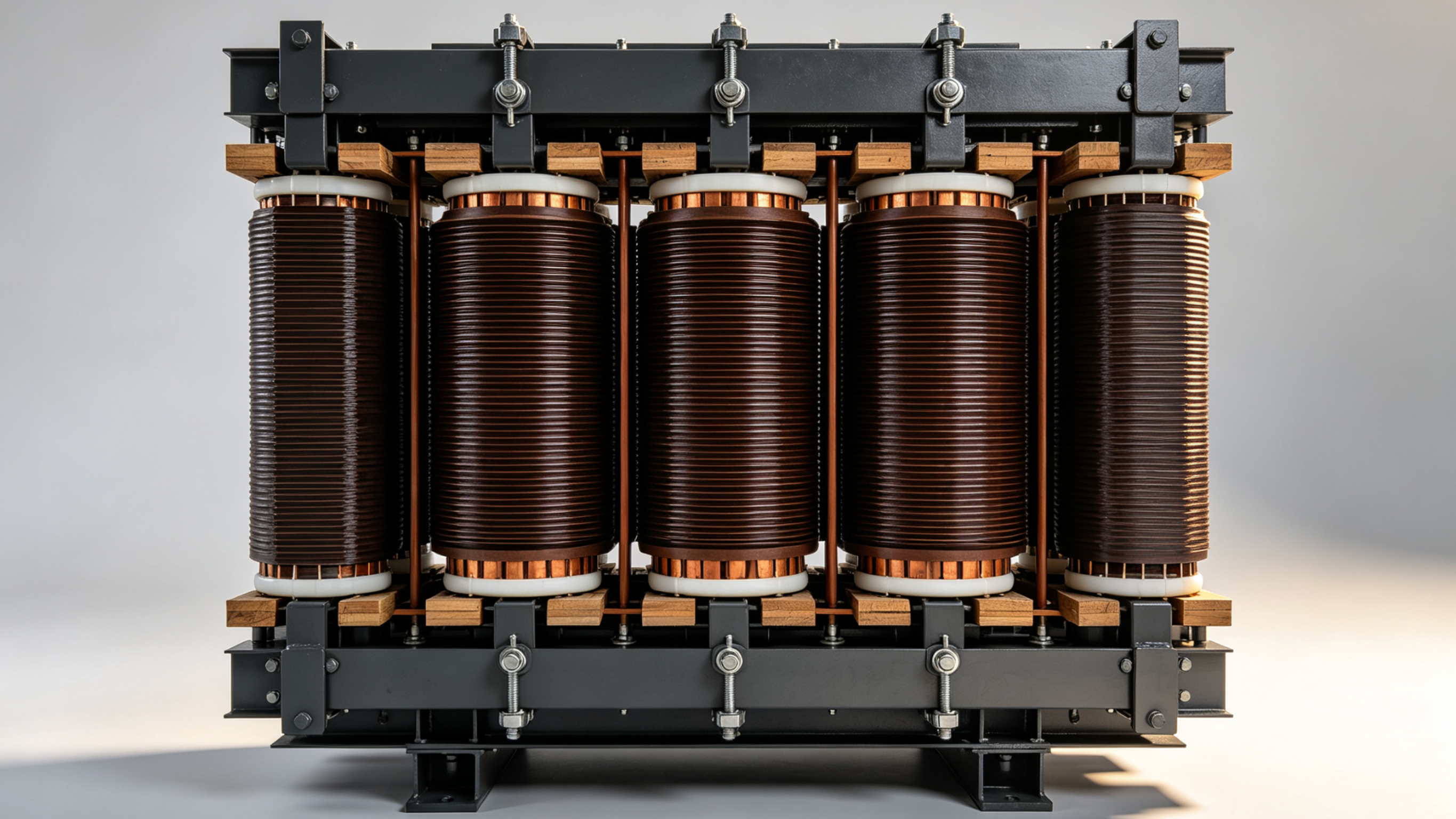
Five-Limb Core: When Three Limbs Are Not Enough — and What Replaces Them
Sep 22, 2026
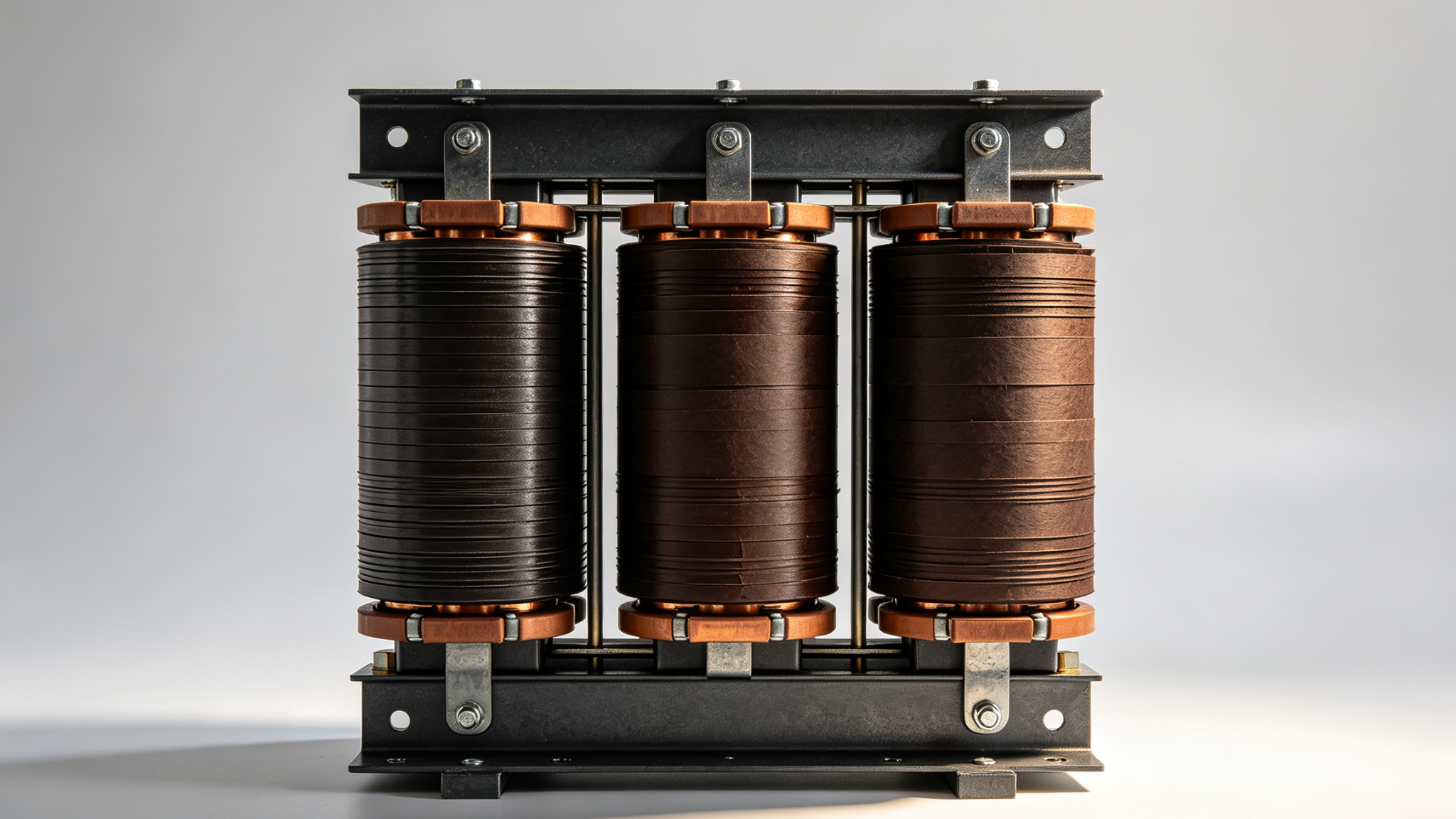
Three-Limb Core: The Workhorse of Three-Phase Transformers — and Why It Matters for Your Order
Sep 18, 2026
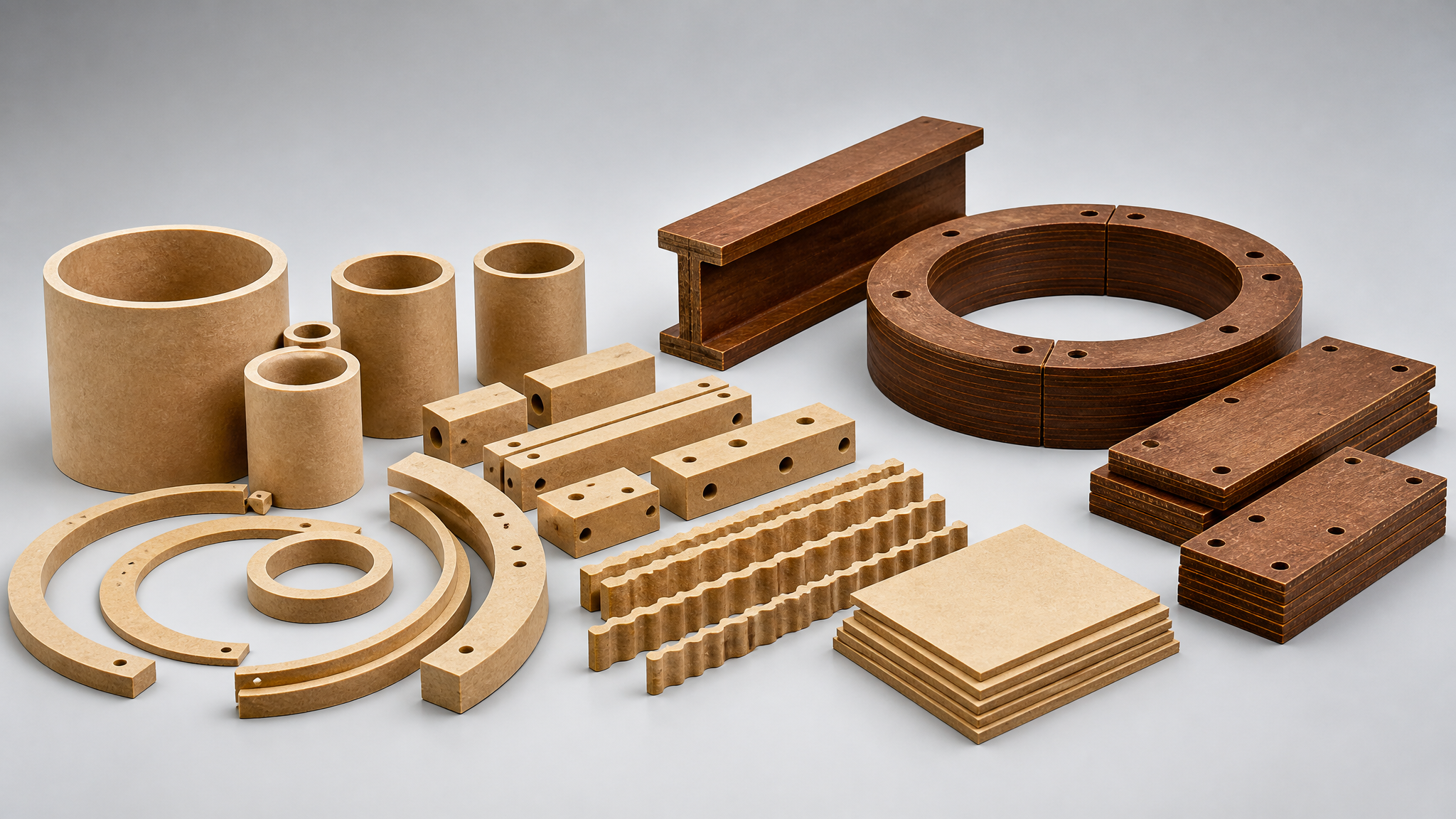
Transformer Insulation Components: The “Quiet” Parts That Decide Your Transformer’s Lifetime
Sep 15, 2026
Questions about what you just read?
Send your specs or your question — a U.S.-based engineer replies within 24 hours.